
Beyond Software: How Indana Connects Your ERP to the Physical Workplace
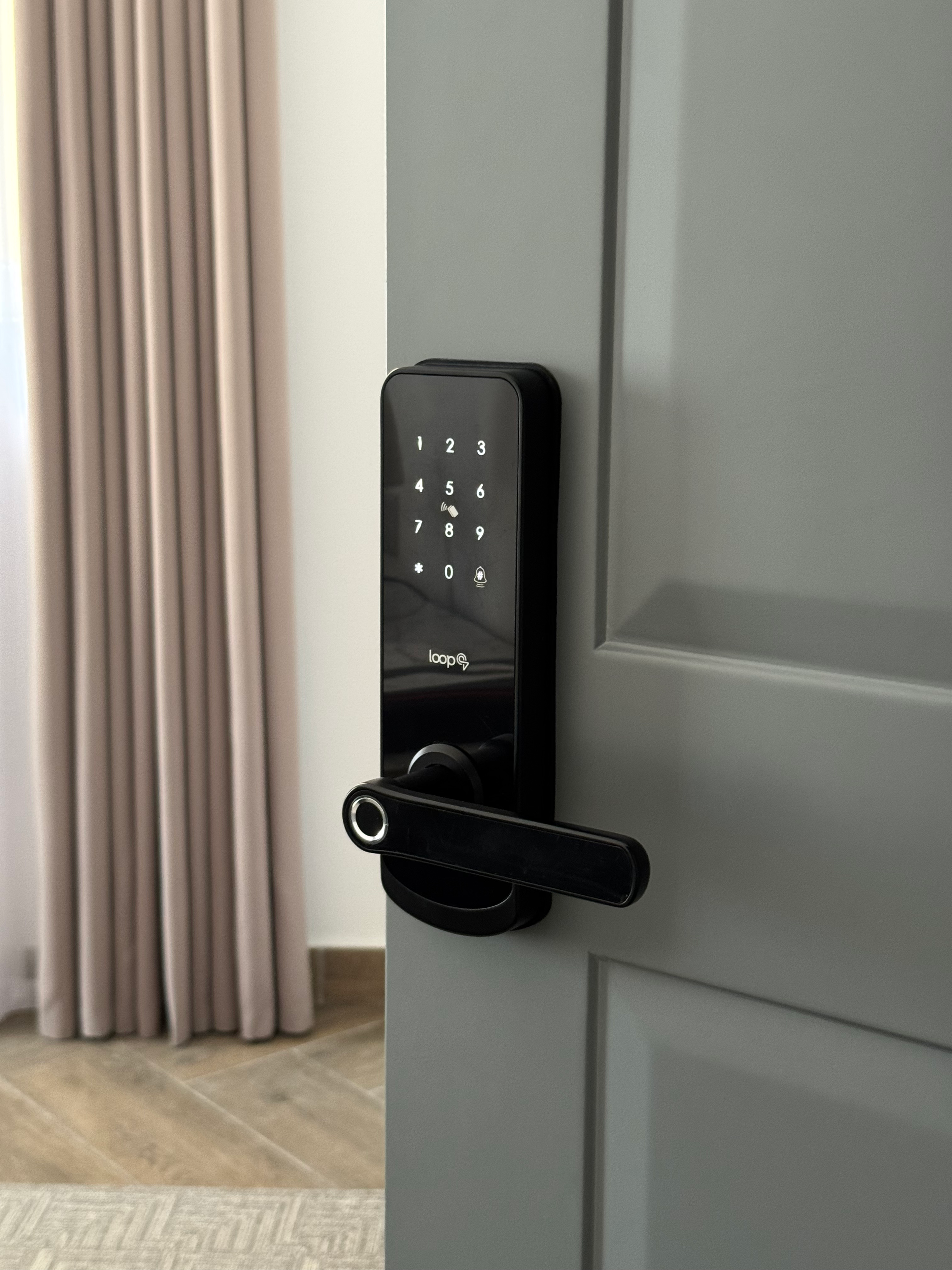
Most conversations about ERP stay firmly in the world of screens — invoices, reports, dashboards. But a real business doesn’t live entirely on a screen. There are doors that need to open for the right people, rooms that need to be assigned and locked, meters that need reading, and none of that naturally lives inside a typical accounting system.
Indana ERP is built to reach a bit further than that, connecting the software side of a business to the physical side, so the two don’t end up running as two separate worlds.
Access control, tied to who’s actually meant to be there
Visitor management doesn’t have to stop at a check-in screen. We’ve implemented access control integrated directly with visitor pass management, using QR code readers that grant access based on who’s actually been checked in and cleared to be on site — rather than a physical badge that someone forgets to hand back, or a door code that gets shared around and never changed. The access permission and the visitor record are the same piece of information, not two systems that have to be kept in sync by hand.
Hospitality: from booking to the room door
For hospitality businesses, we’ve connected Indana with booking channel managers to handle room access control and room lock programming directly from the reservation. When a booking comes through, the room lock can be programmed to match the guest’s stay automatically, rather than someone at the front desk manually cutting a key card and hoping the checkout date was entered correctly. It’s a small piece of the guest experience, but it’s exactly the kind of manual step that causes friction when it’s handled separately from the booking system itself.
Energy metering and ESG reporting
Sustainability reporting is becoming a real requirement for more businesses in Malta, not just a nice-to-have on a website. We’ve integrated energy metering directly into Indana, capturing consumption data as part of the same system that already holds the rest of the business’s operational data. That makes ESG reporting a matter of pulling from information that’s already there, rather than a separate annual scramble to gather usage figures from different meters, different sites, and whoever happens to still have the readings on file.
Part of a wider shift
Businesses everywhere are increasingly connecting physical operations to their core software, and Malta is no exception — smarter buildings, more automated facilities, and more pressure to report on sustainability rather than estimate it. That shift isn’t reserved for large corporations with dedicated facilities-technology budgets. It’s just as relevant for a mid-sized business that wants fewer manual processes and a clearer, more accurate picture of how its physical operations are actually running.
Why this belongs in an ERP conversation at all
None of these are exotic, one-off projects. They’re examples of the same underlying idea: an ERP is more useful when it isn’t confined to invoices and stock counts. Access control, hospitality operations, and energy data are all part of how a business actually runs day to day, and keeping them connected to the same platform as the rest of your operations means fewer disconnected tools, fewer manual handoffs, and a clearer picture of the business as a whole.
Have a physical process you’d like connected?
If there’s a part of your operation — access, hospitality, facilities, energy — that still runs separately from the rest of your systems, schedule a call and we’ll talk through what’s possible.